Degenerative Joint Disease in Dogs: What Owners Should Know (Vet Verified)

If your dog seems stiffer in the morning, slower on walks, or hesitant to jump into the car, you may be noticing early signs of joint disease. Degenerative joint disease in dogs is common – especially in senior and large-breed dogs – but with early support, comfort, and mobility can often be maintained for years.
What Is Degenerative Joint Disease in Dogs?
Degenerative joint disease in dogs is a chronic condition where joint cartilage gradually breaks down, leading to inflammation, stiffness, and pain. Often referred to as dog osteoarthritis, it progresses over time but can be managed with weight control, joint support, pain management, and lifestyle adjustments that improve mobility and quality of life.
Key Takeaways
- Degenerative joint disease (DJD) is a progressive, lifelong condition.
- Dog osteoarthritis is the most common form of DJD.
- Early signs often appear before limping.
- Weight management and consistent monitoring are critical.
- Subtle mobility and rest changes can signal worsening discomfort.
“Degenerative joint disease often starts subtly—reduced activity, stiffness after rest, or changes in sleep patterns. Catching those early shifts allows us to intervene sooner.”
— Sara Leitão, DVM, Veterinarian at Maven Pet
What Is Degenerative Joint Disease in Dogs?

Degenerative joint disease in dogs refers to the gradual deterioration of joint cartilage and surrounding structures. According to the American Veterinary Medical Association and Cornell University College of Veterinary Medicine, cartilage normally cushions bones and allows smooth movement and when that cushioning wears down:
- Bones rub against each other
- Inflammation increases
- Joint capsules thicken
- Pain and stiffness develop
Over time, this leads to reduced mobility and chronic discomfort.
Commonly affected joints include:
- Hips
- Knees
- Elbows
- Shoulders
- Spine
DJD Dogs vs Dog Osteoarthritis: Are They the Same?
Yes – in most cases.
Dog osteoarthritis is the most common type of degenerative joint disease in dogs. The terms are often used interchangeably in clinical practice.
- DJD dogs = dogs diagnosed with degenerative joint disease
- Dog osteoarthritis = the inflammatory joint condition resulting from cartilage breakdown
Osteoarthritis may develop due to:
- Aging
- Previous joint injury
- Hip or elbow dysplasia
- Cruciate ligament tears
- Obesity
While aging increases risk, DJD is not simply “old age” — it is a medical condition requiring active management.
“I got the Maven sensor for my 14-year-old Chihuahua mix with heart and trachea issues. It gave me back peace of mind – I can track her RRR, BPM, drinking, and activity anytime and know instantly if something’s wrong. Highly recommend!”

★★★★★
Chiara De Luca
Titti
What Are the Early Signs of Degenerative Joint Disease in Dogs?
Many owners expect limping, but early DJD is often missed.
Watch for:
- Stiffness after rest
- Slower rising from lying down
- Hesitation on stairs
- Reluctance to jump into the car
- Shorter walks
- Reduced play
- Behavioral changes (irritability, withdrawal)
- Changes in sleep patterns
The Texas A&M Veterinary Medical Teaching Hospital emphasizes that decreased activity is frequently one of the first indicators.
Because progression is gradual, these changes are easy to attribute to “just slowing down.”
How Does Degenerative Joint Disease Progress Over Time?
Degenerative joint disease is progressive but variable.
Early Stage
- Mild inflammation
- Occasional stiffness
- Activity mostly normal
Moderate Stage
- Visible stiffness
- Reduced endurance
- Muscle loss around affected joints
Advanced Stage
- Persistent pain
- Difficulty standing
- Significant mobility limitation
- Possible joint deformity
Without management, inflammation fuels further cartilage damage — creating a cycle of pain and degeneration.
The goal is not to cure, but to slow progression and improve comfort.
How to Help a Dog With Arthritis
If your dog has been diagnosed with DJD, evidence-based management typically includes a multimodal approach.
1. Weight Management
Excess weight increases joint load and inflammation. Even modest weight loss significantly improves mobility.
2. Controlled, Consistent Exercise
Low-impact movement helps maintain muscle and joint flexibility:
- Leash walks
- Swimming
- Underwater treadmill therapy
- Other physiotherapy modalities
Avoid sudden bursts of intense activity.
3. Veterinary Pain Management
Your veterinarian may recommend:
- NSAIDs
- Joint supplements
- Injectable therapies
- Prescription diets
Never give human pain medications.
4. Joint Supplements
Common options include:
- Glucosamine
- Chondroitin
- Omega-3 fatty acids
Discuss evidence and dosing with your veterinarian.
5. Physical Rehabilitation
Targeted therapy strengthens supporting muscles and improves joint stability.
Lifestyle Adjustments That Improve Comfort
Small changes at home can make a significant difference:
- Orthopedic bedding
- Non-slip rugs on slippery floors
- Ramps instead of stairs
- Elevated food and water bowls
- Gentle daily stretching (under guidance)
These adjustments reduce strain and support independence.
If your dog has concurrent dog arthritis, proactive changes can delay functional decline.
How Maven Helps Monitor Mobility Changes
One challenge with degenerative joint disease in dogs is that progression can be slow and difficult to notice day-to-day.
The Maven pet health tracker and dog health tracker monitor:
- Activity levels
- Rest duration
- Sleep quality
- Heart rate
- Resting respiratory rate
- Scratching behavior
Dogs with DJD often show:
- Gradual decrease in daily activity
- Longer rest periods
- Disrupted sleep due to discomfort
- Elevated resting heart rate from chronic pain
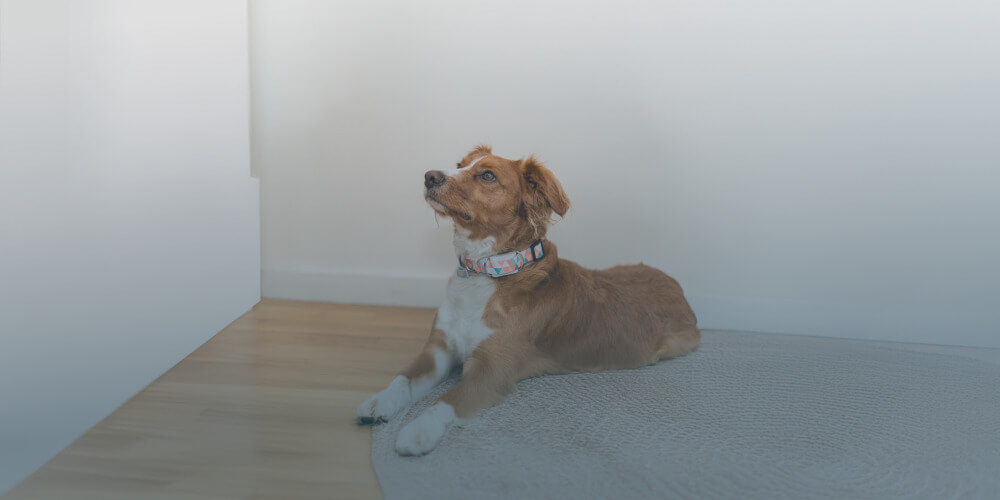
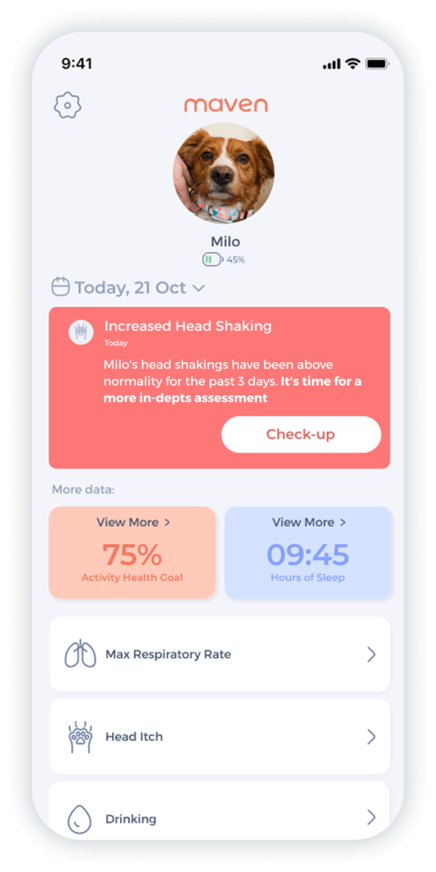
Monitor heart rate, respiratory rate, activity & rest, drinking, itch behavior.
Maven establishes a personalized baseline and alerts owners when mobility or rest patterns shift. That means you can detect worsening joint pain earlier — or evaluate how well a new medication or supplement is working.
Through the pet health app, owners can track long-term trends and share data with their veterinarian to guide treatment adjustments.
Continuous monitoring supports proactive care instead of reactive crisis management.
FAQ (Vet-Reviewed)
It is a chronic condition where joint cartilage breaks down over time, causing inflammation, stiffness, and pain. It is progressive but manageable with proper care.
In most cases, yes. Dog osteoarthritis is the most common form of degenerative joint disease, and the terms are often used interchangeably.
Signs include:
-Shorter walks
-More difficulty rising
-Increased stiffness
-Changes in sleep
-Reduced enthusiasm for activity
Monitoring mobility trends helps identify a gradual decline.
Effective management typically includes weight control, low-impact exercise, veterinary pain relief, joint supplements, and home environment modifications.
Conclusion: Early Action Makes a Lifelong Difference
Degenerative joint disease in dogs is common – but it doesn’t have to mean a rapid decline in quality of life. With early recognition, thoughtful management, and consistent monitoring, many dogs remain active and comfortable well into their senior years.
Pay attention to subtle changes: a slower rise, a shorter walk, a restless night. Those small shifts matter.
Proactive care – supported by veterinary guidance and continuous monitoring – empowers you to adapt as your dog’s needs evolve, helping them move more comfortably for longer.
Maven Pet focuses on improving the quality of life of our pets with technology, using artificial intelligence (AI) to enable proactive pet care. By accurately collecting and monitoring pet data 24/7 and flagging any irregularities, Maven Pet empowers pet parents and veterinarians to stay ahead of potential health issues, ensuring the well-being and longevity of our beloved companions.